




As a longtime drummer, I inevitably find my way to a good rhythm game the same way I find myself air drumming to a Rush song. I’ll never turn down an opportunity to count a 4/4 beat out loud. The same goes for WarioWare, the undisputed King of Weird Nintendo franchises. It seems only fitting then, despite never having played a Rhythm Heaven game beforehand, that I’ve completely fallen in love with Rhythm Heaven Groove’s irreverent sense of humor, catchy tunes and deviously designed microgames.
The premise is simple: each game tasks you with completing small challenges to the beat of the music that accompanies it. Most of the time, you’re only pressing a single button, with more complex games adding secondary prompts to spice things up. In one game, you might find yourself pressing only the A button to launch frogs off of lilypads, while another may require you to use the left and right buttons to perform more complex patterns as a pop star’s backup dancer.

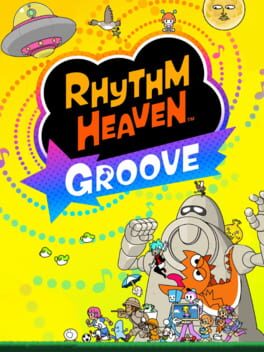
Rhythm Heaven Groove
 $39.99
At first glance, I wouldn’t fault you for calling Rhythm Heaven Groove’s collection of microgames easy or even basic, especially when compared to other rhythm games with more robust mechanics. But while it’s certainly a simple game to pick up and learn, the real challenge comes from how the developers use this simplicity to mess with you. Once you’ve mastered the basics, the game starts throwing random obstacles at you, forcing you to rely on your mastery of the rhythm as you avoid and anticipate a variety of wild and wacky distractions.
In one game, you’ll have to jump over hurdles in a fictional video game that bugs out and suddenly speeds up. In another game where you play as a crab bouncing objects into the air on the beach, nearby beachgoers will put drinks down in the foreground, obfuscating your view entirely. In both cases and in the many others that feature obstacles and switchups like this, you’re forced to rely on previously established audio cues to continue hitting notes without missing a beat.
And for a game that doesn’t have much in terms of UI – there’s no note highway ala Guitar Hero or Rock Band here – paying attention to those audio cues is the only way you’ll consistently pass a stage. They’ll also put a stupid grin on your face every time you hear them. My family is united by our love of repeating different vocal stims and Rhythm Heaven Groove has given us enough new material for a lifetime. From the “pa pi pu pe po” the little round Trundlorbs (their actual name) chant as they jump in Hoop Trundling to the “hmm hmm” you hear right before catching a tomato in Slice N Dice Kitchen, there are no shortage of distinct and recognizable noises that you’ll find stuck in your head long after playing.
And that doesn’t even speak to how funny some of these games are even before you account for those silly audio cues. Longtime Rhythm Heaven director Kazuyoshi Osawa’s history with the aforementioned WarioWare series is apparent, and fans of those games will feel right at home with Rhythm Heaven Groove’s equally irreverent sense of humor. One game tasks you with flexing a bodybuilder’s muscles to bounce fruit into the air. Another sees you high-fiving in a single-file line set against stock photos of construction workers. One game rewards you for keeping rhythm simply by revealing stock photos of tea, soda and hot cocoa. It’s all inherently silly, but the developers completely commit to the bit through the addition of unlockable pieces of lore that expand on each of the pseudo-stories being told in each game.

Those unlockables – and the extra lore bits they reveal – were enough to motivate me to go for a Perfect on each stage when presented with the opportunity. While they’re not nearly on the level of something like the trophies in Super Smash Bros., they provide plenty of an excuse to revisit and replay each stage until you’ve perfected it. Being given the stage at random also adds tension, as you’ll only have a limited number of tries before potentially missing out on your chance at unlocking something. The silly comics and blurbs you earn provide some extra context to the wackiness playing out, while also reinforcing Rhythm Heaven Groove’s distinct personality.
I haven’t even mentioned Beatspell, a completely separate and brand new rhythm/RPG hybrid mode, where you’ll explore dungeons, cast spells and fight monsters using your mastery of the beat. If you’re disappointed in the simplicity of the main games, Beatspell adds some much-needed strategic depth and is a bit more demanding as a result. Once I unlocked the full suite of spells and I started seeing some enemy variety, I blew through all of Beatspell’s 8 stages much like everything else I’d played before it.

There are some disclaimers I should add before giving Rhythm Heaven Groove the proverbial seal of approval: the primary being that you’re simply not going to have a great time playing it docked on a TV. There’s an in-game calibration tool, but I still experienced inconsistent hit detection after configuring things. It ultimately led to some frustrating moments while playing solo and eventually left me with no meaningful way to engage with the small number of multiplayer games on tap. Beyond the calibration issue, I also found the first couple of stages a little too easy upon returning, but your mileage may vary depending on your own personal relationship with rhythm.
But even accounting for those quibbles, there is more than enough silly, catchy and downright delightful stuff packed into Rhythm Heaven Groove to warrant picking it up – even more so if you’re a fan of rhythm games, or just games that feature goofy little guys doing goofy things. The deceptively simple gameplay pairs wonderfully with a sense of humor that revels in catching you off guard and there’s just enough extra content to keep you coming back for more. In a moment where risk-averse publishers are trying to speak to broader, safer audiences, I’m glad Nintendo chose to speak to a weirdo like me.
